Hot water
Water heater yearly care
A tank water heater sits in a closet or basement doing its job quietly for years, which makes it easy to ignore. A short yearly routine helps it heat efficiently, keeps a key safety valve working, and gives you an early look at the rust and drips that come before a tank gives out.
How a tank heater wears
Cold water enters the tank through a dip tube that carries it to the bottom, where a gas burner or an electric element heats it. Minerals dissolved in the water settle out as sediment and collect on the tank floor. In areas with hard water, that layer builds quickly. Sediment makes a gas heater work harder because the flame has to heat through the crust, and it can make popping or rumbling sounds as water trapped under it boils.
Inside the tank, a metal rod called the anode slowly corrodes so the steel tank does not. Once the rod is used up, the tank itself starts to rust. Most tanks last somewhere between 8 and 12 years. The manufacture date is usually coded into the serial number on the label, and a quick search of the brand and serial format tells you the year.
The temperature and pressure relief valve
Every tank has a temperature and pressure relief valve, usually near the top with a pipe running down toward the floor. If the tank ever overheats or builds too much pressure, the valve opens and lets water out instead of letting the tank fail. Testing it once a year makes sure it is not stuck. Place a bucket under the discharge pipe, stand to the side, and lift the lever briefly. Hot water should rush out and stop when you let go.
If the valve does not release, or keeps dripping afterward, stop there and call a licensed plumber. A valve that does not work is a safety problem, not a weekend project.
Setting the temperature
Many safety organizations and manufacturers suggest about 120°F for household hot water. That is hot enough for showers and dishes and lowers the risk of scalding, especially for young children and older adults. Each 10 degrees lower also trims standby energy loss. Gas units usually have a dial on the gas control valve. Electric units have thermostats behind panels on the side, and the power must be off at the breaker before those panels come off.
Worked example: flushing a 50-gallon electric tank
This walk-through assumes an electric tank with a hose-thread drain valve near the bottom and a floor drain nearby. Allow about an hour.
- Switch off the water heater's breaker. Electric elements can burn out in seconds if they are powered without water around them.
- Let the water cool for a few hours, or plan the flush for the morning after the heater has been off overnight.
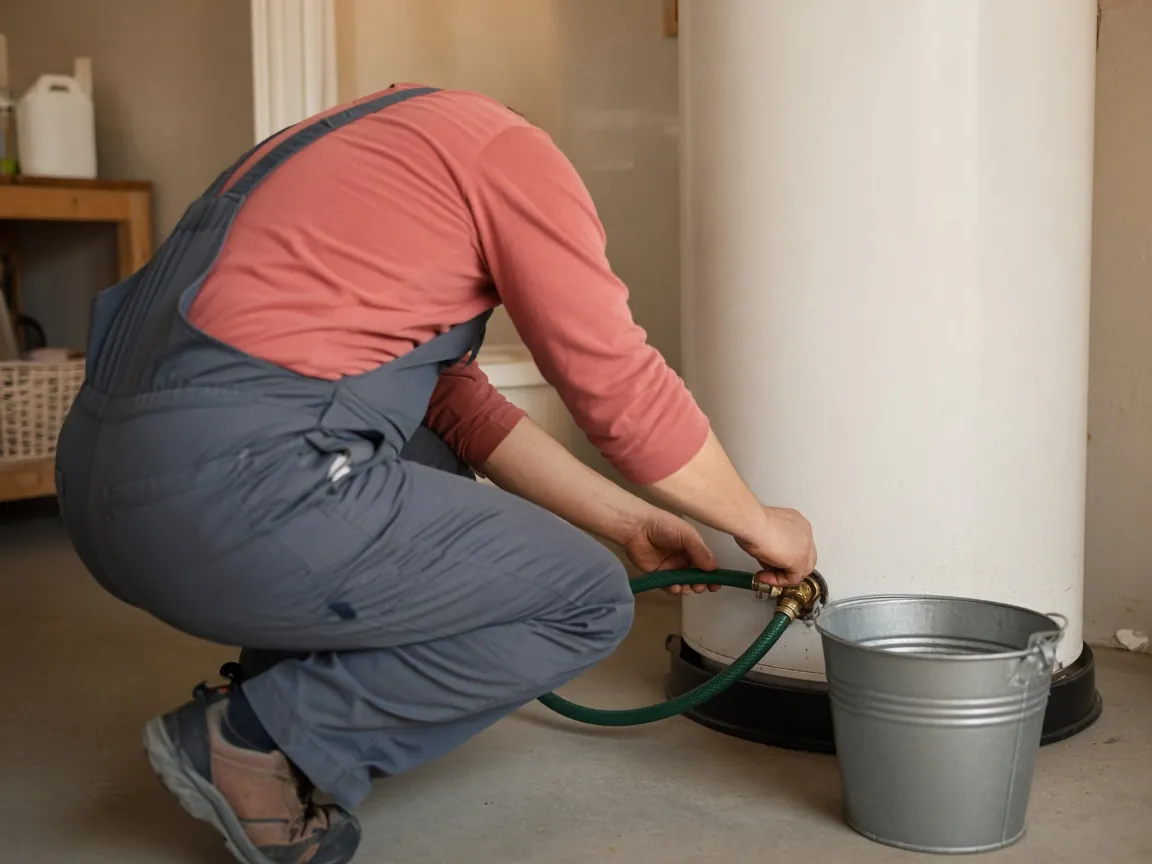
- Thread a garden hose onto the drain valve and run it to the floor drain or outside to a spot lower than the valve.
- Open a hot water faucet somewhere in the house so air can enter the tank, then open the drain valve.
- Let a few gallons run until the water clears. To stir up more sediment, briefly open and close the cold water inlet valve on top of the tank while the drain is still open.
- Close the drain valve, remove the hose and open the cold inlet fully. Leave the hot faucet open until it runs with no sputtering, which means the tank is full.
- Only then switch the breaker back on. Hot water should be back in about an hour.
For a gas tank, the steps are the same except you turn the gas control to its pilot setting instead of switching off a breaker. Older plastic drain valves can weep after being opened; keep a brass hose cap on hand to stop a slow drip until the valve can be replaced.
Quick reference
| Task | How often | Notes |
|---|---|---|
| Flush sediment | Once a year, more with hard water | Power off first on electric units |
| Test relief valve | Once a year | Call a plumber if it sticks or keeps dripping |
| Check anode rod | Every 3 to 5 years | Often easier for a plumber with the right socket |
| Look for rust or moisture at the base | Each season | A drip pan with a drain helps catch leaks |
| Confirm temperature | Once a year | About 120°F at the nearest faucet |
Water heater checklist
- Find the manufacture year from the serial number and note it.
- Flush a few gallons of sediment once a year.
- Lift the relief valve lever briefly with a bucket under the pipe.
- Check the floor and the drip pan for moisture each season.
- Measure the hot water at the closest tap and aim for about 120°F.
- Keep stored items at least a couple of feet from a gas heater.
Key terms
- Sediment
- Minerals that settle on the bottom of the tank, especially in hard-water areas.
- Anode rod
- A sacrificial metal rod inside the tank that corrodes so the tank does not.
- Relief valve
- The temperature and pressure relief valve that opens if the tank overheats or overpressurizes.
- Dip tube
- A tube that carries incoming cold water to the bottom of the tank.
Questions people ask
My hot water looks rusty. Is the tank failing?
Rusty water only from the hot side can mean a spent anode or rust inside the tank. If it shows up along with moisture at the base, start planning for a replacement.
Do tankless heaters need the same care?
They have no tank to flush, but most makers call for descaling the heat exchanger on a schedule. The manual lists the interval.
How do I know the tank is near the end?
Age past about ten years, rumbling that flushing does not fix, rust at the fittings and water around the base all point toward replacement soon.
This guide describes common household equipment. Follow the instructions on your own appliances and local codes, and bring in a licensed professional for anything involving gas, wiring or a valve that will not move.