September, October and November
Fall checklist for inside the house
Fall is when the house closes up and the heating comes on, which makes it the right season for the safety devices that guard a sealed house. Many families tie the alarm check to the weekend the clocks change so it never slips.
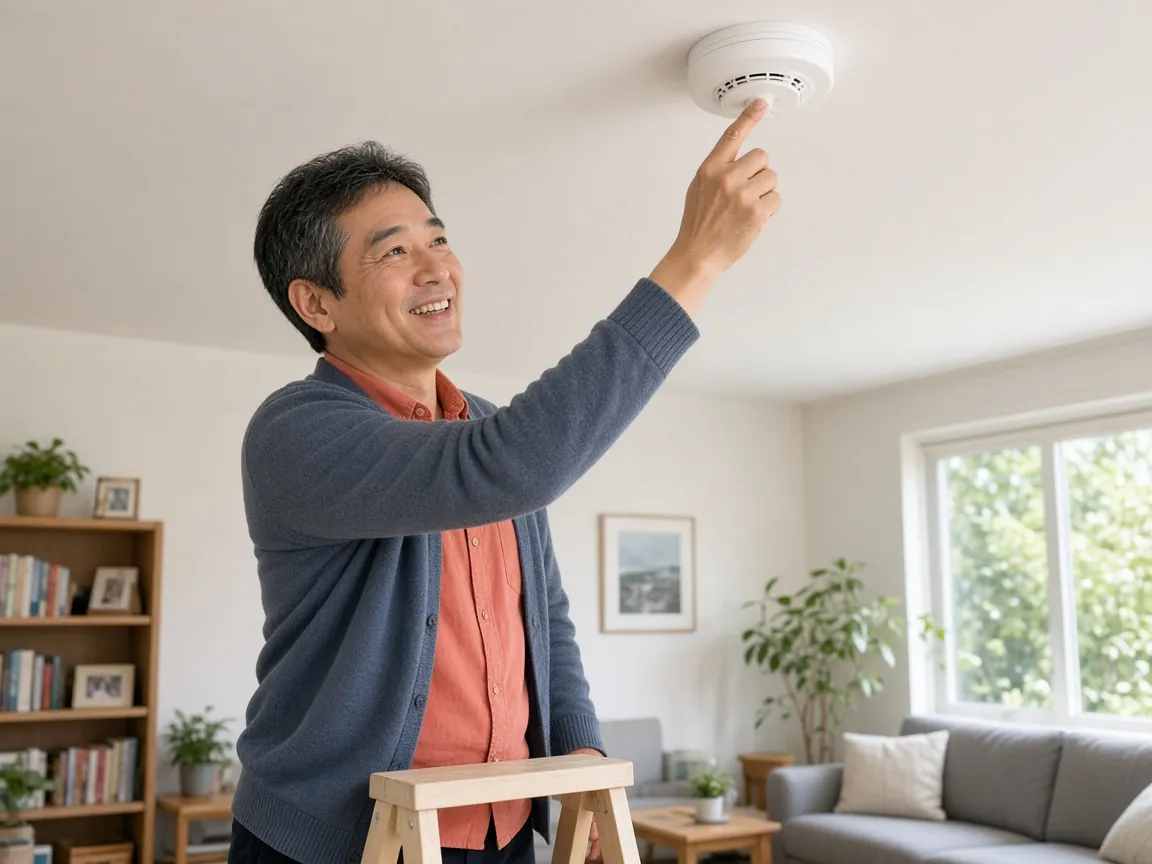
The fall list
- Press the test button on every smoke alarm and carbon monoxide alarm in the house.
- Read the manufacture date on the back of each alarm and replace smoke alarms that are 10 years old.
- Replace batteries in alarms that use them, and note the date on the case.
- Make sure there is a smoke alarm on every level, outside each sleeping area and in each bedroom.
- Put a fresh filter in the furnace before the first cold night.
- Flush a few gallons of sediment from the water heater and test its relief valve.
- Find the main water shutoff and hang a tag on it so anyone can find it in a hurry.
What to look for
| Where | Warning sign | Usual next step |
|---|---|---|
| Smoke alarm | Older than 10 years, chirping | Replace the alarm |
| CO alarm | Past the end-of-life date on the label | Replace the alarm |
| Water heater | Rumbling, water at the base | Flush, then call a plumber if it continues |
Smoke alarms and CO alarms are different devices
A smoke alarm senses particles from fire. A carbon monoxide alarm senses an invisible gas that fuel-burning appliances, an attached garage or a blocked flue can release. Combination units do both, but many homes have separate devices. Carbon monoxide alarms belong on every level and near sleeping areas, and their life is printed on the label, often 7 to 10 years.
Get a text when the next season's list is up
The indoor season reminder box on the Get started page is optional and starts blank.