Wet rooms
Grout, caulk and shower seals
A tiled shower looks waterproof, but the tile is only the visible layer. Grout lines, the caulk bead where the tub meets the wall and the rubber sweep on the door decide whether a daily shower stays in the room or slowly soaks into studs and subfloor.
What each layer is doing
Most bathroom tile is set over a backer board and, in newer showers, a waterproof membrane. The tile and grout shed the bulk of the water, while the membrane catches what soaks through. Cement-based grout is porous by nature. It absorbs a little water during every shower and gives it back as the room dries, which is fine as long as it can dry and as long as the joints are intact.
Caulk has a different job. Wherever two surfaces meet at an angle, such as the tub deck and the first row of wall tile, the inside corners of a shower, or the spot where a shower pan meets the walls, the materials expand and shift at different rates. Rigid grout cracks at those changes of plane. A flexible bead of silicone caulk stretches instead, so the seam stays closed. When a bathroom has grout in those corners, a hairline crack there is almost guaranteed within a few years.
Glass doors and curtains add a third layer. A vinyl sweep along the bottom of a swinging door and the magnetic or vinyl strips on its edges keep spray from running across the floor and wicking under the threshold. They wear out quietly and are cheap to swap.
Simple tests you can run in five minutes
The drop test for grout. Put a few drops of water on dry grout lines in the spray zone and wait three to five minutes. If the grout darkens quickly, its sealer has worn off and the joints are taking on more water than they should. If the drops bead up, the sealer is still working. Epoxy grout, which feels slick and almost plastic, does not need sealing at all.
The fingernail test for caulk. Run a fingernail along the bead. Healthy silicone is springy and stuck to both sides. Peeling edges, a bead you can lift with a nail, or a gap you can see light through means the seal has failed. Black speckling under a clear or white bead usually means moisture has been sitting behind it; scrubbing the surface will not reach that, so the bead needs to come out.
The tap test for tile. Tap tiles near the tub and the floor of the shower with the handle of a screwdriver. A sharp click is normal. A hollow, dull sound over several tiles, or tiles that flex, can point to water damage behind them. That is a point to call a licensed tile setter or plumber rather than patching the surface.
Worked example: recaulking a five-foot tub over a weekend
Picture a standard 60-inch alcove tub with tile on three walls. The joint where the tub meets the tile runs about 60 inches along the back wall and roughly 30 inches on each end wall, so about 10 feet in total. The two vertical inside corners above the tub add about 6 feet each. That is roughly 22 feet of bead, which one 10-ounce tube of 100% silicone covers with plenty left over.
- Saturday morning, 30 to 45 minutes: slice the old bead along both edges with a utility knife or caulk remover, then pull it out in strips. Scrape the residue with a plastic scraper so you do not scratch the tub finish.
- Saturday, 10 minutes: wipe the joint with isopropyl alcohol to lift soap film and leftover silicone. Leave the fan running and the door open. The joint has to be completely dry, so skip showers in that tub for the rest of the day.
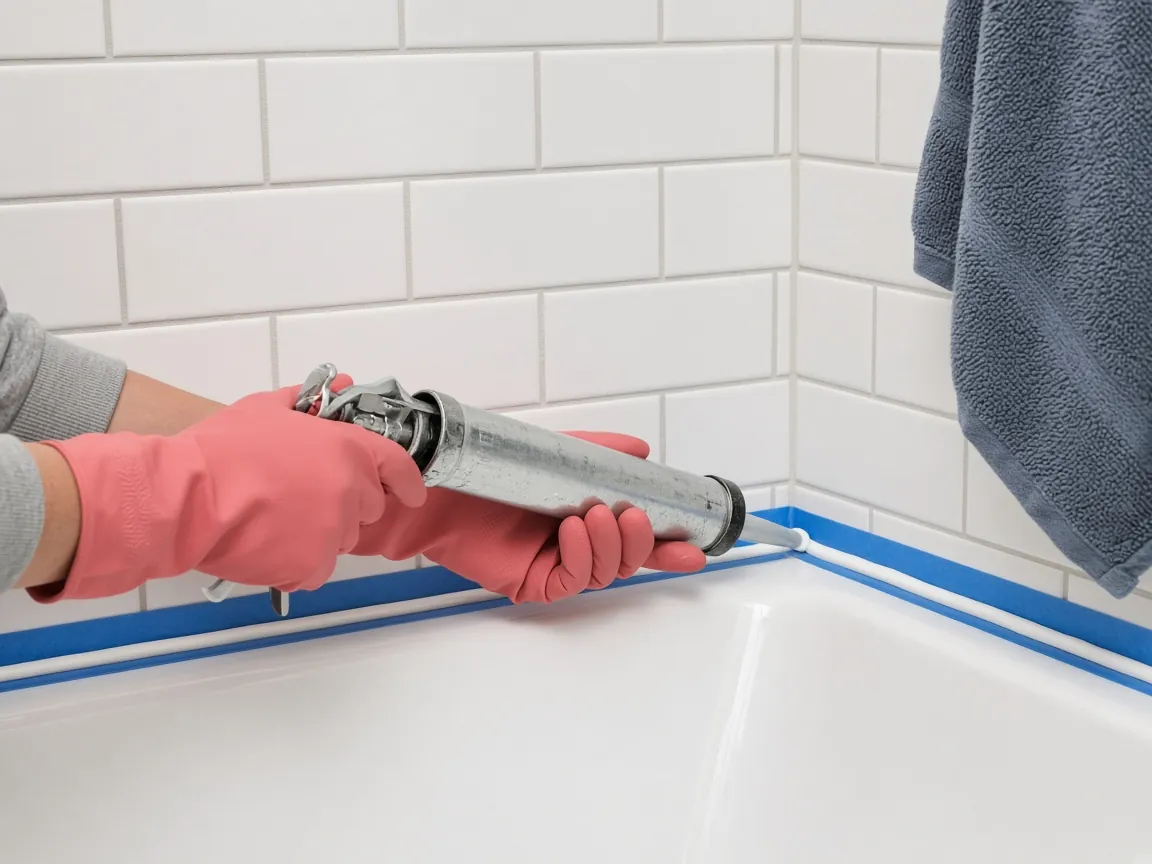
- Sunday morning, 30 minutes: fill the tub partway with water. The weight pulls the tub down slightly, so the bead you lay now will not be stretched when someone climbs in. Run painter's tape on both sides of each joint, leaving a gap about a quarter inch wide.
- Sunday, 15 minutes: lay a steady bead, smooth it with a wet fingertip or a smoothing tool, and pull the tape right away while the silicone is still soft.
- Sunday to Monday: leave the water in the tub and let the bead cure for the time printed on the tube, often about 24 hours, before anyone showers.
Quick reference
| Part | How often to check | Usual lifespan | Sign it needs attention |
|---|---|---|---|
| Cement grout sealer (shower walls and floor) | Every spring with the drop test | About a year in daily-use showers | Grout darkens within minutes of a few drops |
| Silicone caulk at tub and corners | Each season | Roughly 5 years, sooner with heavy use | Lifting edges, gaps, dark spots under the bead |
| Shower door sweep and side strips | Twice a year | A few years | Water on the floor after showers, brittle or torn vinyl |
| Bathroom exhaust fan | Twice a year | 10 years or more | Mirror stays fogged long after a shower, loud rattling |
Wet-room checklist
- Do the drop test on shower grout and reseal cement grout lines that darken.
- Check every caulk bead at the tub, shower pan and inside corners with a fingernail.
- Replace any bead with dark spots behind it instead of bleaching the surface.
- Swap a torn or stiff door sweep and side strips.
- Run the exhaust fan 20 to 30 minutes after each shower and clean its grille.
- Squeegee glass and tile after showers to cut down on standing water.
- Tap low tiles and the shower floor, and call a licensed pro about hollow or loose spots.
Key terms
- Change of plane
- Any spot where two surfaces meet at an angle, such as a wall and a tub. These joints get caulk, not grout.
- Penetrating sealer
- A clear liquid brushed onto cement grout that soaks in and slows water absorption without leaving a shiny film.
- Epoxy grout
- A resin-based grout that resists water and stains on its own and needs no sealer.
- Door sweep
- The flexible strip along the bottom edge of a glass shower door that keeps spray inside the enclosure.
Questions people ask
Can I put new caulk over old caulk?
It is tempting, but silicone does not bond well to old silicone, and any moisture trapped under the old bead stays there. Pull the old bead first.
Is white haze on grout a problem?
A chalky film is usually soap and mineral residue. A mild cleaner and a soft brush clear it. Grout that crumbles when you brush it is a different story and should be raked out and regrouted.
Which caulk goes around a tub?
Look for 100% silicone labeled for kitchens and baths. Acrylic latex caulk is easier to tool but does not hold up as long where water sits.
This guide describes common household equipment. Follow the instructions on your own appliances and local codes, and bring in a licensed professional for anything involving gas, wiring or a valve that will not move.